Saturday, January 8, 2022

COVID at record heights in Wisconsin, and it's the volume that's the problem

No matter how you slice it, the number of people in Wisconsin testing positive for the coronavirus is at unprecedented levels.
COVID-19 case counts reached record highs again Friday as the omicron variant continues to surge across the state, according to state Department of Health Services data.

The one-day case count increased to a record high of 12,293 cases, while the seven-day average increased to 7,637 cases — more than double the amount of cases just a month ago.
And combined with previous cases that were already being treated, it means that we are also seeing record numbers of COVID-related hospitalizations.
According to Wisconsin Hospital Association data, 2,109 people are hospitalized with COVID-19 — the highest number of people admitted since November 2020.
In looking at where cases are, the big change under the now-dominant Omnicron variant has been that highly-vaccinated, urbanized areas seem to be getting more cases than the rural, less-vaccinated areas that wrre seeing higher numbers of cases under Delta.

That indicates that the original set of vaccinations may be wearing off over time, or not as effective against Omnicron.

Information from the Wisconsin Department of Health Services also backs up the theory that vaccine effectiveness is fading, particularly when you look at infections among children. Those kids ages 14-17 (in green) were able to be vaccinated before school started this year, and had much lower levels of cases than their younger, school-aged counterparts (age 4-8 in orange and 9-13 in yellow). Then Omnicron broke out in December, and you can also see that kids under 3 years of age (in light blue) have had a significant jump in cases.

But it's not just kids, as DHS notes that all age-groups saw their number of cases spike up in December, especially among those ages 35-44 (in light green) and 25-34 (in red), who were less likely to have been boosted than older Wisconsinites at the time.

That being said, it does seem that being vaxxed and especially boosted does still make it less likely you'll come down with COVID, But the gap has been narrowed quite a bit with Omnicron's emergence. At least that's what the early data says in Dane County, which has the highest % of its people vaxxed and boosted in Wisconsin, and offers a decent sample size. (click for clearer picture)

I think this thread by Dr. Ashish Jha at Brown University Medical School sums up the situation well.

Yes, Omnicron isn't as likely to leave to severe illness for individuals as Delta did, especially if someone is vaxxed/boosted. Which means that people in less-vulnerable demographics are going to end up relatively OK (although you still wouldn't want to get it). But given the large number of people that are getting infected, it'll still overload hospitals and might well shut more businesses/schools due to a lack of staff. And those disparities in outcomes will likely become obvious in the next few weeks.

Not great, folks. Not great. I've been limiting my exposure more in 2022 than I was in the last 2 months of 2021, and while I won't go into 2020-style shutdown mode, I'm definitely going to be more aware of my surroundings in coming weeks, even in heavily vaxxed/masked Madison.

"Disappointing" jobs report still good, and ends a great 2021.

Yet again, Friday's jobs report was immediately spun as a disappointment.

Left out of that headline, the unemployment rate fell from 4.2% to 3.9%, continuing an impressive drop that happened throughout 2021. I'll get back to that point, but I want to discuss the payrolls side.

I still see quite a few bright spots in this report. Especially in Manufacturing (+26,000), which continued its strong comeback in 2021, with its 8th straight month of gains. Nearly 350,000 manufacturing jobs were gained in 2021, the most in any year since 1994, and a stark contrast to the pre-COVID period, when we actually LOST jobs in this sector from the start of 2019 to February 2020.

Construction also seems to have recovered from its Summer lull, with another 22,000 seasonally adjusted jobs added in December, and that sector is now within 100,000 jobs of its pre-COVID peak.

And those trying to claim that December is a sign of some slowdown should note that (like so many other months in 2021) previous reports had their gains revised upward.
The change in total nonfarm payroll employment for October was revised up by 102,000, from +546,000 to +648,000, and the change for November was revised up by 39,000, from +210,000 to +249,000. With these revisions, employment in October and November combined is 141,000 higher than previously reported.
So put that together with the December number, and that's 340,000 more jobs than we originally thought. Pretty good in a time of such low unemployment.

Wage growth reflected the tight labor market and a record number of quits in November, with a big jump in wages for December.
In December, average hourly earnings for all employees on private nonfarm payrolls increased by 19 cents to $31.31. Over the past 12 months, average hourly earnings have increased by 4.7 percent. In December, average hourly earnings of private-sector production and nonsupervisory employees rose by 18 cents to $26.61.
The BLS also updated the unemployment figures over each of the last 12 months, and while the overall months didn't change too much, it's worth noting that the unemployment rate in this country dropped from 6.7% at the end of 2020 to 3.9% at the end of 2021, basically putting us back to where we were in 2018 and 2019.

But a big difference is that in 2018, if we gained 200,000 jobs in a time of near-full employment after another type of deficit-growing stimulus (the GOP Tax Scam), it was considered a great accomplishment.

Maybe it's the Wall Street "expert" prognosticators that don't know what they're talking about. These guys end up consistently wrong, which skews the news reports on the jobs numbers, and then they stay quiet when those figures are revised up in future months. You'd almost think that there was monkey business going on with these guys.

And let's also note that we've come a long way this year in digging ourselves out of the hole that was created in 2020.

Note that this trajectory matches up with the track the we were on at this point in the recovery from the 1981-82 recession (marked in bright purple). And that's an interesting comparison, because 2021 just beat out 1983 for the largest drop in the US unemployment rate from one December to the next.

Change in December-December unemployment
1982-83 -2.5% (10.8% to 8.3%)
2020-2021 -2.8 (6.7% to 3.9%)

And a lot of that 1982-83 drop was triggered by the Fed's end of '70s-era inflation fear and an end to Reagan's initial austerity. Funny that.

The payrolls and household surveys have been very different in the last few months, with the household survey saying a lot more people are getting jobs than the payrolls survey would indicate. But when you look over the last 12 months, the numbers end up looking pretty similar.

What this jobs report tells me is that stimulus worked in 2020 and 2021 in getting the economy back on track after the initial wreckage from COVID. And that unlike what we saw at this time last year, the resurgence of COVID cases isn't leading to added layoffs and a slowing of economic activity. Granted, this was before omnicron was full force, and we will see what January's numbers hold. But there is no question that 2021 was a great year for the US jobs market, and that we are back near full employment for what we can have at this stage of the pandemic.

Let's tell the truth here. 6% inflation and near-5% wage growth with 3.9% unemployment >>>>> Low inflation, low wage growth, and 6% unemployment. And while some tightening of money is likely needed, keeping unemployment low and demand flowing needs to be the big picture goal as 2022 begins.

Thursday, January 6, 2022

WisGOPs again choose poser BS over real solutions in funding police

I saw that WisGOP came out with a plan this week to help communities add police.
Specific bill language was not made available Tuesday, but [GOP Rep. William] Penterman said the package proposes $5,000 bonuses to all new law enforcement officers in Wisconsin; a signing bonus that would provide $1,000 for each year of work experience to officers relocating to Wisconsin from out of state, capped at $10,000; and $2,000 bonuses for officers already in Wisconsin, Penterman said, adding that some of the money would come from local agencies.

“We can’t serve the people, we can’t do the things that our community needs us to do and wants us to do unless we have people filling those positions,” said Dodge County Sheriff Dale Schmidt, vice president of the Badger State Sheriffs’ Association.
That led to this simple observation today about "staffing shortages" in public services.

Funny how WisGOP thinks some jobs are more important than others, isn't it?

So what else does WisGOP want to do to help get more people to want to be cops.
Other bills in the package would reimburse trainees for police academy costs, require two technical colleges to introduce a police academy class for aspiring part-time officers and create a matching grant program for small law enforcement agencies to equip and train officers, said Rep. Alex Dallman, R-Green Lake.
OK, higher pay and reimbursing police trainees and grants to small communities do seem like good ideas to encourage more people to enter law enforcement. So how are we going to pay for it?

Do you even need to ask?
…[the package] would divert around $25 million in federal COVID-19 relief money toward recruiting, training and retaining law enforcement officers.
Which means it’s a stunt designed to have Governor Evers veto it, and then have Republicans complain about “defunding police”.

Not only does Evers not want to be told what to do with the funds sent to his office, but let’s recall that Attorney General Josh Kaul already asked the Legislature to add funding to law enforcement. The difference would be that Kaul would actually use the state’s large budget surplus instead of throwing away COVID funding from the Feds.
Kaul said the “centerpiece” of his package is a series of grant programs that would dole out more than $50 million to fund community policing and prosecution efforts, violence prevention services, re-entry programs and crime victim services.

Another approximately $4 million would go toward law enforcement training and programs focusing on school safety and missing and murdered Indigenous women.
Not surprisingly, the gerrymandered GOP Legislature hasn’t considered those ideas. Nor have they considered other bills from Evers and Dems that would have paid for more police with state money, nor have they given local governments the ability to afford that added staff if they wanted to do it on their own.

That reality was reiterated in a memo that outgoing Dem Assembly Leader Gordon Hintz requested from the Legislative Fiscal Bureau, which notes that the GOP Legislature refused to give more shared revenue to communities in each of the last 2 budgets.
The Governor's 2019-21 and 2021-23 budget recommendation each included CMA [county and municipal aid] increases that were not included in the final budget Acts. The Governor proposed increasing county and municipal aid by 2% for calendar year 2020 and thereafter in the 2021-23 budget. For the 2021-23 budget, the Governor proposed increasing county and municipal aid by 2% in 2021 and by a 2% in 2022, and thereafter.

If the Governor's 2019-21 and 2021-23 budget recommendation had been enacted, funding for the county and municipal aid program would have increased from $753,075,300 in 2019 to approximately $768,137,200 in 2020, $783,500,000 in 2021, and to $799,170,000 in 2022, and each year thereafter….

Good point, Gordon.

Rep. Hintz also notes that Republicans failed to approve of Evers’ 2021-23 request to increase state Payments for Municipal Services (PMS), which would have given an extra $2.065 million a year to help local communities pay for police, fire and garbage services in communities that have state buildings.

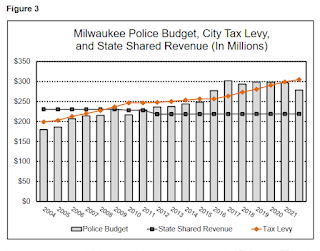
As mentioned previously, it’s WisGOP's lack of shared revenues and flexibilities for local governments that are the real reason police funding is lacking. That’s especially true for the state’s largest attractor of tourism dollars- Milwaukee, which was spending nearly half of its general fund on police in 2020, and spent more on police than the City was allowed to raise in property taxes for every year between 2016 and 2020.

And even the proposed decline in 2022 spending on police in Milwaukee is misleading, as much of it reflects:

1. Moving 911-type communications positions out of the Police Department and into a centralized Emergency Communications Department that deals with multiple public safety areas.

2. $6 million in ARPA funding, as part of the funds sent to the City. Which means ARPA funding is already being used to hire and retain police officers in Wisconsin.

If WisGOP is legitimately concerned about Wisconsin's largest city not be able to maintain its level of police, maybe they should have taken Gov Evers up on his offer to allow Milwaukee and many other Wisconsin communities to put in their own sales tax, if their voters were OK with it. They could even tie part/all of that sales tax to police operations and other safety measures if they want. I'd bet Evers and Milwaukee and other communities would be fine with that.

But WisGOP really doesn't want Milwaukee or other large Wisconsin cities to be able to maintain a healthy police force and stable services. They just want the appearance of things getting worse (or appearing to be worse) so they can keep rube voters scared about "crime" and blame it on Evers/Dems.

See through the WisGOP BS, and have them come up with a real funding solution that doesn't play games. You know, like what Dems want to do.

Tuesday, January 4, 2022

The Great Resignation picks up even more in November

Up through November, the Great Resignation was continuing, and as we found out today, if anything it is speeding up.
Americans quit jobs at a record pace in November as job openings hovered close to their all-time highs in a sign that workers continued to hold most of the leverage before the omicron variant sent COVID-19 cases soaring.

The number of workers quitting jobs vaulted to 4.[5] million from 4.2 million, above the prior record of 4.4 million reached in September, the Labor Department said Tuesday. That means 3% of workers voluntarily left their positions, matching September's record high.

Employers posted 10.6 million job openings, down from a near-record 11 million the previous month and just below July’s all-time high, Labor said in its Job Openings and Labor Turnover Survey. Openings have topped 10 million for six straight months.
And that jump in quits was headed up by a big increase in Accomodation and Food Services, with an increase of 159,000 from October’s figure. Since vaccinations became available to most Americans in March, that sector has had a larger increase in quits than hires in every month since August.

And hires in Accomodation and Food Services only increased by 4,000 in November, helping to explain why that sector stalled out in November’s jobs report after good job growth the previous month. Interestingly, reported job openings in that sector dropped by 261,000, which indicates that perhaps expansion plans were being put on hold as COVID infections started rising.

Another big driver of that increase in quits came from professional/business health care/social services (+52,000), which probably is another layer as to why hospitals are overloaded these days, and why people are lying on waiting room floors to get services. In fact, health care/social assistance now had a greater growth in need since March than food services/accomodations does.

In these jobs that combine high levels of personal contact and stress while COVID still runs around, it is clear a lot of Americans aren’t accepting the job situations that they were previously in.

Despite the “disappointing” jobs numbers from November (well, for now anyway), we still had more hiring was happening, up nearly 200,000 to 6.7 million. That included notable seasonally-adjusted gains in construction (+48,000), and while professional/business services and finance/insurance had sizable levels of quits, many of those open positions were replaced with new hires.

November 2021, quits/hires.
Professional/business services
Quits +68,000
Hires +45,000

Finance/Insurance
Quits +29,000
Hires +30,000

Friday’s December jobs report should give an indication as to whether the breakout of omnicron was starting to have an effect on hiring (but worth noting, that survey is 3 weeks and a lot of COVID cases ago), but given the high level of quits and new hires, I would bet wage growth will be strong, particularly at the lower wage levels, as it has been throughout 2021’s Great Resignation.

Monday, January 3, 2022

Gallagher's garbage on COVID is more WisGOP fauxtrage, double-talk

The first Monday of 2022 and we get this crap?

Gallagher may have a Packer t-shirt and a pretty face, but he's just as much of an ugly lowlife as the rest of Wisconsin's horrendous GOP delegation to Congress. Let me give you more of what the "reasonable" Republican spewed out today.
“So please, don’t fall for the fear game. We have the tools we need to continue to live our lives while protecting the vulnerable. And if you disagree with me, at the very least, can we agree that we cannot shut down schools again. This was our biggest blunder and shame on us if we repeat it again. We can’t afford to inject that fear into our kids’ classrooms or allow them to fall further behind. And I’m sorry but remote learning is not a substitute, especially for young kids. Remote learning is a euphemism for school shutdowns and that is a recipe for student failure. Sitting in front of a screen all day is not learning. Milwaukee Public Schools is shutting down schools. Same with Madison. I’ve heard reports in Racine. Thankfully not yet in Northeast Wisconsin.

“And when it comes to remote learning, talk about a policy that punishes the poor relative to the rich. Rich people can do remote work. Rich people can run away to their beach houses with a bunch of iPads and high-speed internet and probably hire private tutors, while they sit there wondering who stocks the shelves at Whole Foods. Working-class people have to work, in person. And their kids need to be in school, in-person, with teachers, and with other students. Not even Biden’s education secretary wants to shut down schools.
Nobody WANTS to shut down schools, you a-hole! But when there is a lack of staff because of mass illness and don't want the illness to continue, sometimes it's the option you have to take to try to stop the damage and get back to normal.

(By the way, this take on inequalities is quite rich coming from Gallagher, who went to an elite private school in Santa Ana and received degrees from Princeton and Georgetown. Also the lines about "protecting the vulnerable and "beach houses and high speed internet" are cute coming from a guy who didn't vote for the infrastructure bill that expands broadband access or the Build Back Better bill that supports the vulnerable and lessens inequalities)

Gallagher also claims that the recent rise in COVID cases is evidence of the Biden Administration's "failure" because
...There is no federal solution for coronavirus and for most things in our lives. Recognizing that is a cause for courage, not fear. We need to take charge of our own health, our own lives, and our own children, and not spend the rest of our lives locked inside because of fear.
First of all, no one at the federal level is shutting down schools, or really anything else. There have been ZERO limitations on travel outside of airlines (aka "private businesses") who are cancelling flights due to staff being out sick. All of these school closings are decisions being made at the local level, which used to be what Republicans were all about.

And you know the easiest way that we "take charge of our own health, our lives", Mike? By getting vaccinated, limiting your exposure and wearing masks so you are less likely to 1. get the virus, and 2. end up in the hospital if you do get COVID.

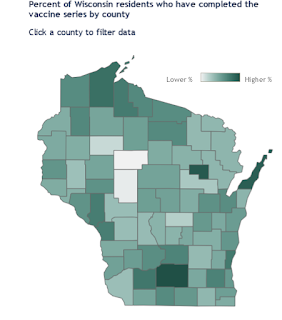
A lot of your constituents in the 920 haven't been taking charge of their own health, because they have some of the lowest vaccination rates in the state (outside of very blue Menominee County and Biden-backing Door County).

But Republicans like Gallagher don't care to ask their constituents to do their part in controlling this latest surge, because they're the ones that want COVID to continue in 2022. Republicans have no ideas of their own to run on (well, nothing that they want voters to know about, anyway), and so they figure their best chance to win in November is to have things be as rotten as much as possible.

Mike Gallagher's garbage from today is a perfect example of this type of two-stepping. GOPs pretend to care about the damage and frustrations that are the result of the pandemic. but they don't do a thing that might actually help to keep people from being affected, if not outright encouraging the reckless, selfish behavior that has made COVID a far larger drag than it ever should have been.

Sunday, January 2, 2022

Sunday reading - how Wisconsin hospitals got pushed into this crisis

Great article from Adam Rogan at the Racine Journal-Times, who gives a stunning illustration of the cascading problems that are resulting due to Wisconsin hospitals being filled past the breaking point.

Here's the opening, which goes over how two younger adults in Southeastern Wisconsin couldn't get the care they wanted.
Kristine Coshun’s son Collin was on the floor, screaming, crying and vomiting repeatedly. There was nothing she could do.

Kristine and her husband took the 22-year-old from one Kenosha County hospital to another. But there weren’t any nurses or doctors available to take care of him. They ended up waiting more than 16 hours in the waiting room of Froedtert Pleasant Prairie Hospital. They never did see a doctor. A receptionist took vital signs of the others waiting to be admitted. Patients were being treated in hallways. During the 17th hour, Collin was admitted to a makeshift room. An IV was put in his arm. He was sent home 2 hours later. They still don’t know what’s wrong with him.

Brittany Palechek might have had a heart attack. A 29-year-old nurse who lives in Waterford, Palechek still doesn’t know if she actually had one. After sitting in the St. Luke’s Hospital waiting room in Milwaukee for 2 hours in nothing but a bathrobe with an IV in her arm, she ran out of patience, took the IV out on her own, and walked out.
Why is this happening? Rogan mentions reasons such as a lack of trained staff (due to a lack of pay and burnout from the huge caseloads of the last 2 years) and a lack of hospital space in general. But he also mentions that a big reason why is that COVID patients are taking up space that could be used for others in need of assistance that didn't have self-inflicted complications.
Since COVID patients typically spend weeks in the hospital, few rooms were being made available. Whenever a room was vacated, extra time had to be set aside for the rooms to be sanitized before another patient could be admitted.
And one other complication is that a lack of primary care and medical information leads people to head to the emergency rooms and urgent care facilities for issues that aren't that serious.
Kristine found herself getting enraged at people who entered the emergency room for non-emergent issues. She said she overheard someone complaining of a stubbed toe. At one point during the night, a man walked in and told the receptionist he had a burn on his leg. The receptionist, Kristine said, almost snapped at him, saying firmly: “You’re going to sit here 20 hours, they’re going to put burn cream and a bandage on you and send you home. Go to Walgreens. Go home.”
Let me quickly digress to another story about filled hospitals from this last week, this one happening in Texas.

In both Wisconsin and Texas, don't you think some of these problems would be cleared up if those states had simply expanded Medicaid to people just above the poverty line, which has led to more regular checkups and discovery/maintenance of medical issues, which lessens the chances of complications that end up putting people in the hospital and taking up beds.

And how many people in Wisconsin and other non-Medicaid expansion states are stuck in substandard jobs that don't allow them time off for minor illnesses and in access to allow for earlier and more frequent COVID testing? Having Medicaid coverage allows for more choice in jobs, and I bet some of those people in the hospital wouldn't have been there if they could have discovered and treated their ailments at an earlier time.

One other part from Rogan's article sticks with me, which comes from Kristine Coshun after she witnessed her son go through agony on a waiting room floor for 17 hours.
As the hours ticked by, Kristine remembers looking at her husband, Richard, and saying “Are we in a Third World country? Where are we? Is this even America?”

“It’s an overall sign of a broken health care system,” she said.
Why yes, it is a broken health care system Kristine. And you would have thought we'd have done more about it before this pandemic made it obvious to a whole lot of others.

Saturday, January 1, 2022

WisGOPs fine with Feds helping expand medical services. But don't call it ACA or BBB

Wanted to circle back on a request that the Evers Administration put in near the end of 2021 to allow the Feds to pay more for certain Home and Community Based Services (HCBS). I went over this at the time, and the memo from the Legislative Fiscal Bureau noted that Wisconsin was set to have the Feds pay for an additional $700 million in services between now and March 2024, as part of the Biden/Dem-approved American Rescue Plan Act (APRA).

Even better, these services wouldn't require any extra tax dollars needed at the state level, because the Feds would give another 10% of Federal Medical Assistance Percentage (FMAP). But the JFC still had to sign off on this, and we know these guys haven't allowed other Federal funding to go through and/or messing it up.

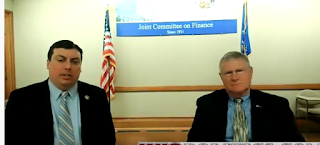
But not only did the GOPs on Finance allow this extra HCBS funding to go through, we saw some Republicans singing the praises of the extra funding, including State Rep. Donna Rozar from Marshfield.
The Wisconsin Department of Health Services was just granted approval by the Joint Committee on Finance to use new federal money to provide a 5% increase to reimbursement rates for Medicaid home and community-based services (HCBS). Types of HCBS receiving this rate increase include: alcohol and drug abuse, behavioral treatment, in-home nursing, mental health, in-home occupational therapy, respiratory care, respite, and self-directed personal care, among others.

Representative Donna Rozar (R-Marshfield) advocated among her colleagues for approval of this funding and issued this statement after funding was secured:

“As a nurse, I have first-hand knowledge of the benefits in-home services provide and I could not be more pleased to see this funding increase approved. I strongly support this type of funding being used to supplement wages of the people doing the work on the ground so we can recruit and retain top-tier healthcare workers within these critical systems. I appreciate that the service providers in these areas are being recognized for their hard work, but I’m even more pleased for the clients who will have better outcomes for their health needs by being cared for by appropriately compensated individuals. I want to thank my colleagues on the Joint Finance Committee for approving this important request.”
Nice thoughts Rep. Rozar, and getting more long-term care at home or in community settings is indeed badly needed, especially given how overloaded our hospitals and medical facilities are right now.

Want to know what would do the same thing, except have another 20% covered by the Feds? Expanding Medicaid under the Affordable Care Act! But Robbin' Vos and the rest of the Koched-up "leadership" in the WisGOP Assembly won't even consider it, even when it would have saved Wisconsin taxpayers over $1.6 billion dollars over the next 2 years under the same ARPA stimulus that Rep. Rozar praised.

Know what else allows for more HCBS services? The Build Back Better Act! As the Center for Budget and Policy Priorities describes
The Build Back Better legislation creates a financial incentive for states to improve the quality of and increase access to Medicaid HCBS, which are optional services that states don’t have to cover. First, states could apply to receive planning grants from the Department of Health and Human Services (HHS) to develop comprehensive HCBS improvement plans. After the HHS Secretary approves a state’s plan, the state would get a 6 percentage-point increase in its FMAP for Medicaid HCBS. In addition, states would get an 80 percent FMAP for administrative costs associated with implementing the plan, significantly greater than the regular 50 percent FMAP for state administrative costs....

Build Back Better builds on the HCBS investments included in the American Rescue Plan, which made additional federal funding available (also through an FMAP increase) for one year beginning in April 2021 for states to bolster their efforts during the pandemic to help seniors and people with disabilities live safely in their homes and communities rather than in nursing homes or other congregate settings. This funding is helping states shore up HCBS and prevent an erosion of services that could undermine future efforts to expand HCBS to all people who need them.

But even before the pandemic, people already encountered considerable barriers to accessing Medicaid HCBS, with over three-quarters of states reporting wait lists for some services, and widespread reports of workforce shortages and lack of affordable, community-based housing.[19] The HCBS provisions in Build Back Better would allow states to continue the critical work they are beginning with the Rescue Plan investments and make long-term, systemic changes to improve access to HCBS, including through unprecedented actions to bolster the direct care workforce, which is composed primarily of low-income women of color.
A lot of these items just continue what ARPA has already started (albeit at a slightly lower match rate, saving Federal tax dollars), and given the caregiver crisis and filled hospitals, you'd think this would be needed more than ever. So I'm sure Rep. Rozar and the 12 WisGOPs ponm Finance approved of these expanded services in December are demanding that Ron Johnson go along with this provision, right?


Right, guys?

See, Republicans know that bringing long-term care to the home and community works, but they don't want to actually pass a bill to do so because...Obamacare. Or something.